


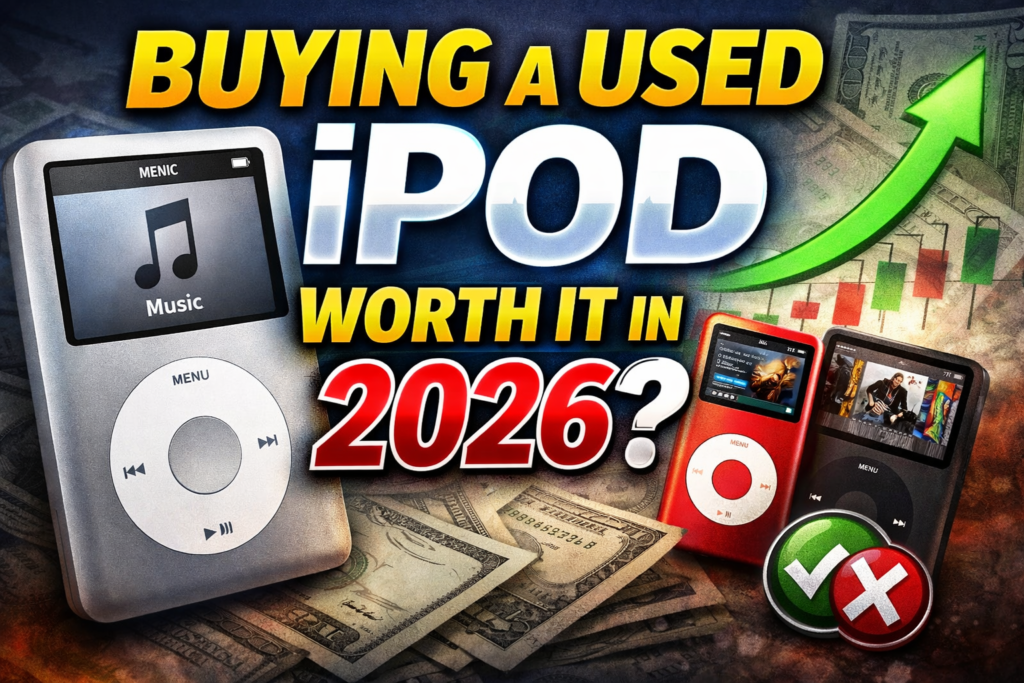
In a world dominated by smartphones and music streaming, the idea of buying a used iPod in 2026 might sound strange at first. After all, Apple officially discontinued the iPod lineup in 2022, ending more than two decades of one of the most iconic music devices ever created.
Yet surprisingly, used iPods are not disappearing, they’re becoming more popular again. Prices are rising, younger buyers are discovering them for the first time, and entire communities are dedicated to restoring and upgrading these devices.
So the real question is:
Is buying a used iPod actually worth it in 2026?
Let’s look at the facts.
Why People Are Buying iPods Again
1. Distraction-Free Music Listening
Modern phones do everything — notifications, social media, emails, ads, and apps competing for attention.
Many users now want the opposite.
Recent reports show buyers turning to iPods as single-purpose devices focused purely on music, helping people disconnect from constant digital distractions.
An iPod doesn’t interrupt your album with notifications. It simply plays music.
2. Nostalgia and Retro Tech Culture
Nostalgia is probably one of the biggest reasons people bust out their old iPod. You go looking through your cupboard and find your old device from 15 – 20 years ago. Switching it back on for the first time can be almost like opening a time capsule. All the music you used to listen to back in the day, in the exact same order it was in originally. Scrolling through those old playlists is a bit like being teleported back to the 2000s.
Vintage technology is trending again, similar to vinyl records and cassette players. Older iPods, especially early or rare models, are now collector items driven by nostalgia and design appreciation.
Some rare units have even sold for extremely high prices, proving that iPods are no longer just electronics — they’re historical tech artifacts.
3. Gen Z Discovery
Interestingly, many new buyers never owned an iPod before.
Search trends and online sales show younger generations adopting iPods as part of a “digital minimalism” lifestyle — choosing simpler devices instead of always-connected smartphones.
For students and commuters, offline music without internet dependency is a major advantage.
4. The Modding Community Keeps Them Alive
One major reason iPods remain viable in 2026 is the upgrade community.
Modern enthusiasts regularly modify older iPods with:
- Flash storage (SD cards or SSDs)
- Larger batteries
- Bluetooth upgrades
- New housings and parts
These upgrades can transform a 15–20-year-old device into a modern offline music player with massive storage and long battery life — something smartphones don’t specifically optimize for.
Advantages of Buying a Used iPod in 2026
True Offline Music Ownership
You own your music files permanently — no subscriptions required.
Excellent Battery Efficiency
Dedicated music players consume far less power than smartphones.
No Ads or Algorithms
Your listening experience stays personal and intentional.
Collector Value
Some models are appreciating assets rather than depreciating electronics.
Repairable (Compared to Modern Devices)
Many iPod models can still be repaired or upgraded, extending lifespan dramatically.
Which Buyers Benefit Most?
A used iPod makes the most sense if you are:
- A music enthusiast who values album listening
- Someone interested in modding or upgrading devices
- A collector of classic Apple products
- Trying to reduce screen time or digital distractions
- A traveler who wants offline entertainment
It may not be ideal if you rely heavily on streaming services or want modern app support.
Final Verdict: Is It Worth It?
Yes — but only for the right reasons.
Buying a used iPod in 2026 is worth it if you want:
- A focused music experience
- A repairable and upgradeable device
- A piece of technology history
- Freedom from subscription-based listening
It is not a smartphone replacement — and it isn’t meant to be.
Instead, the iPod has evolved into something new:
a niche, enthusiast device that delivers something modern technology often forgets — simple, intentional listening.
And ironically, that’s exactly why it still matters today.